
Field Edge
Behind the image
Michael Pilkington
Infrared can offer you a different perspective on the world around you. However, the effects it produces can be garish exaggerating the highlights in the scene, but there are times when this can be used to good effect. One such occasion is in low light situations.
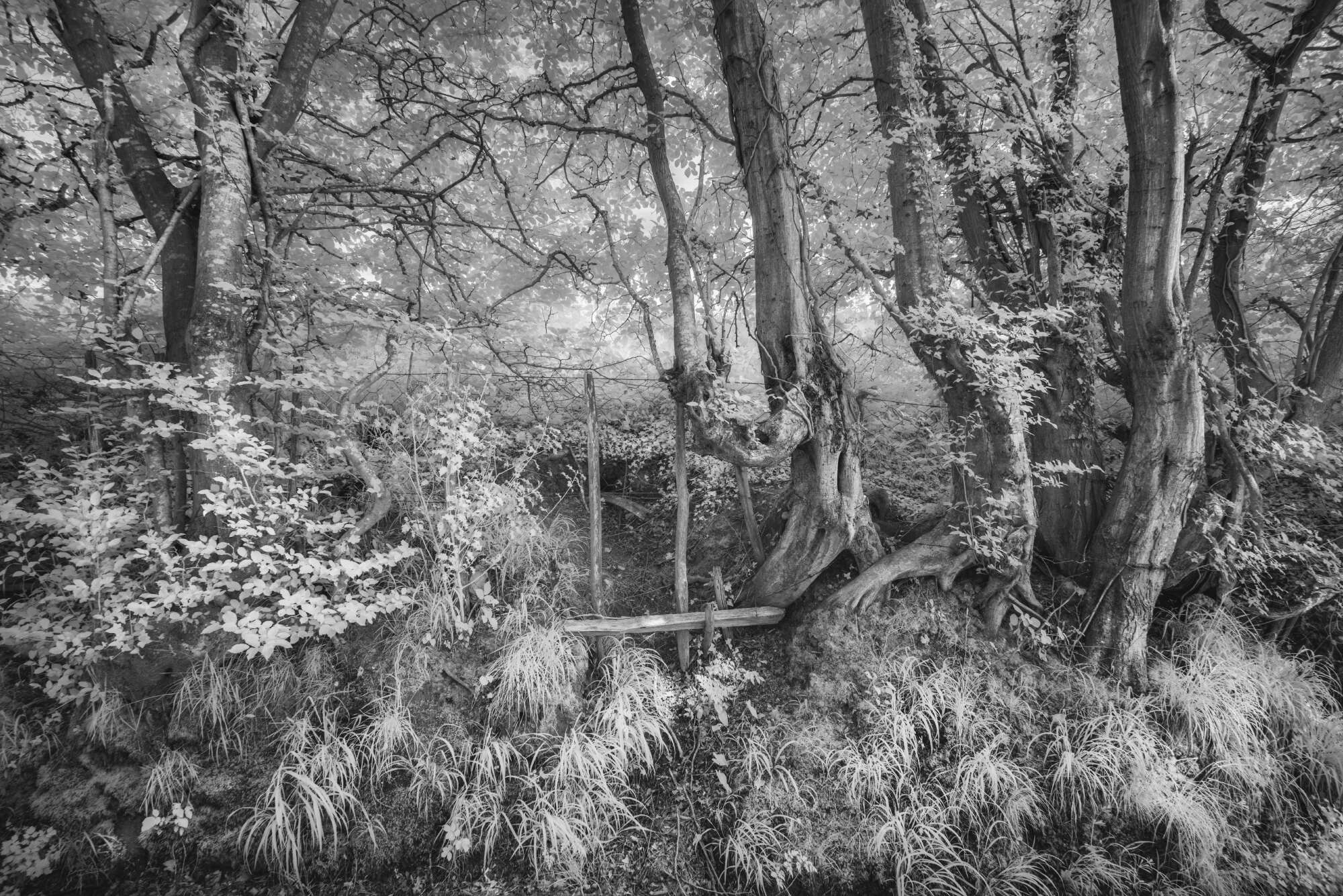
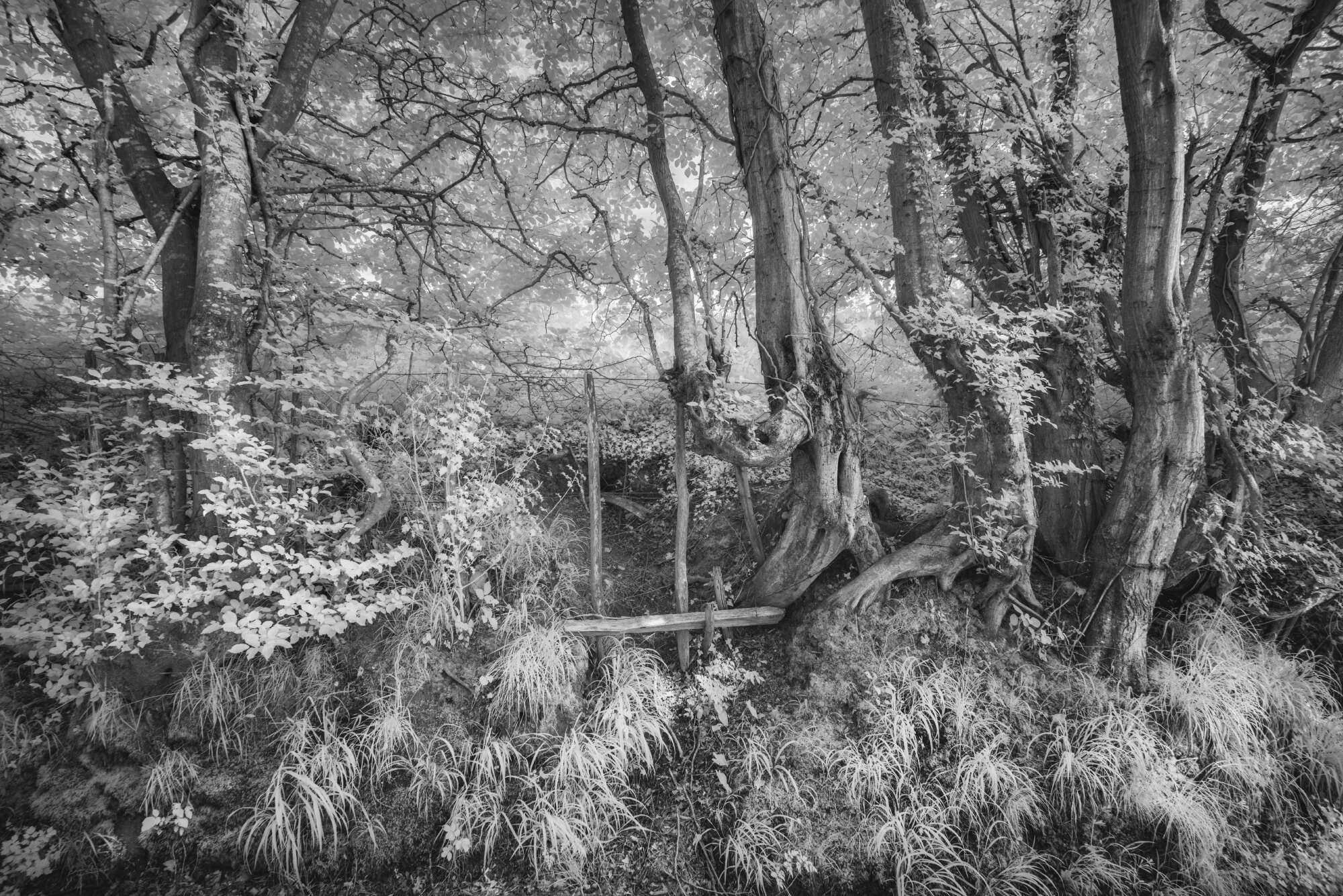
Having a dog obligates you to walk every day. It is enjoyable for the most part and gives you time toreflect on and observe the local countryside. Living where I do, I can enjoy woodlands and farmland. I do like to visualise potential images as I walk and often nothing comes of these musings. This particular location had often caught my eye. I must have walked past this cluster of Hawthorn trees and grasses hundreds of times over the past few years. It is adjacent to a small farm access road, shaded by arching trees overhead. The road is made of stone that is light in colour that reflects a beautiful soft light onto the trees and foliage to its side. It is this combination and quality of this light that had always caught my attention.
I finally decided that I could no longer pass it by. The next sunny day, late in the morning, I decided to take advantage of the direction of the sun, I took myself and my dog to the spot. For me, it was always going to be an infrared shot. The relatively low light and dark shadows would make for a lovely contrast to the whites that would be produced by the infrared light reflecting off the leaves and foliage. Also, this being quite a complex scene, I had always thought it would be better rendered in black and white which would help to emphasise the textures and form in the scene.
This image, for me, optimizes the subtlety of what infrared photography can be. It does not have to be loud and brash screaming out at you.