
Photographing with Intent
Article

Paul Gallagher
If this question was posed thirty years ago it would have been met with a perplexed look from the recipient as it was mostly prints that provided you the opportunity to witness once again the moment in time you pressed the shutter. With the arrival of digital cameras that all changed very quickly. Rather than heading into a darkroom or handing your film cassette into the local photo lab, you instantly have the luxury of viewing on the back of your camera and later, your computer.
The photographic print was an integral component to enjoying photography, and if you were a dedicated enthusiast, the film was developed by you along with the final prints in your own darkroom. There is no arguing that the speed at which we can now review our images is wonderfully convenient, and for most, the images we see on our computer monitors are almost certainly bigger than most of the images we would have paid to be printed on the high-street branch of long-gone companies like Supasnaps.
Given the perceived obstacles from the age of film, not to mention the added cost of having to buy film and processing, there seems to be little point in yearning for the days of analogue, except maybe one, transience. I have had the benefit of travelling to some of the most beautiful landscapes in the world with the sole purpose of photographing them and on my return, I have none of that complexity to consider at all. The only task in hand is to plug my camera’s memory card into its reader and within seconds every moment I encountered is before me displayed in rows of thumbnails, and often very many of them.
As many of us do, I choose a selection of the best and edit them and sometimes make a print and I feel my job is done when it often isn’t. There are several things at play here. Firstly, because each time I press the shutter I have no cause to consider how much film I am using or its associated cost, I am free to make as many exposures as I choose. Secondly, on my return, because I have so many image files to choose from, I often select the candidates that stand out from the crowd, and they get my full attention leaving the rest as superfluous.
It is this freedom and choice that makes digital photography transient as many of the multiple files we did not edit may have indeed been some of the best. Furthermore, the candidates that were afforded the opportunity to be edited but not finalised in print are soon forgotten when the folder of images is closed and remains out of sight in storage. When the print remained as the final stage of image making, all, or certainly many of the exposures that were made, resulted in a print which has the innate property of drawing the viewer back, and more importantly, not forgotten.
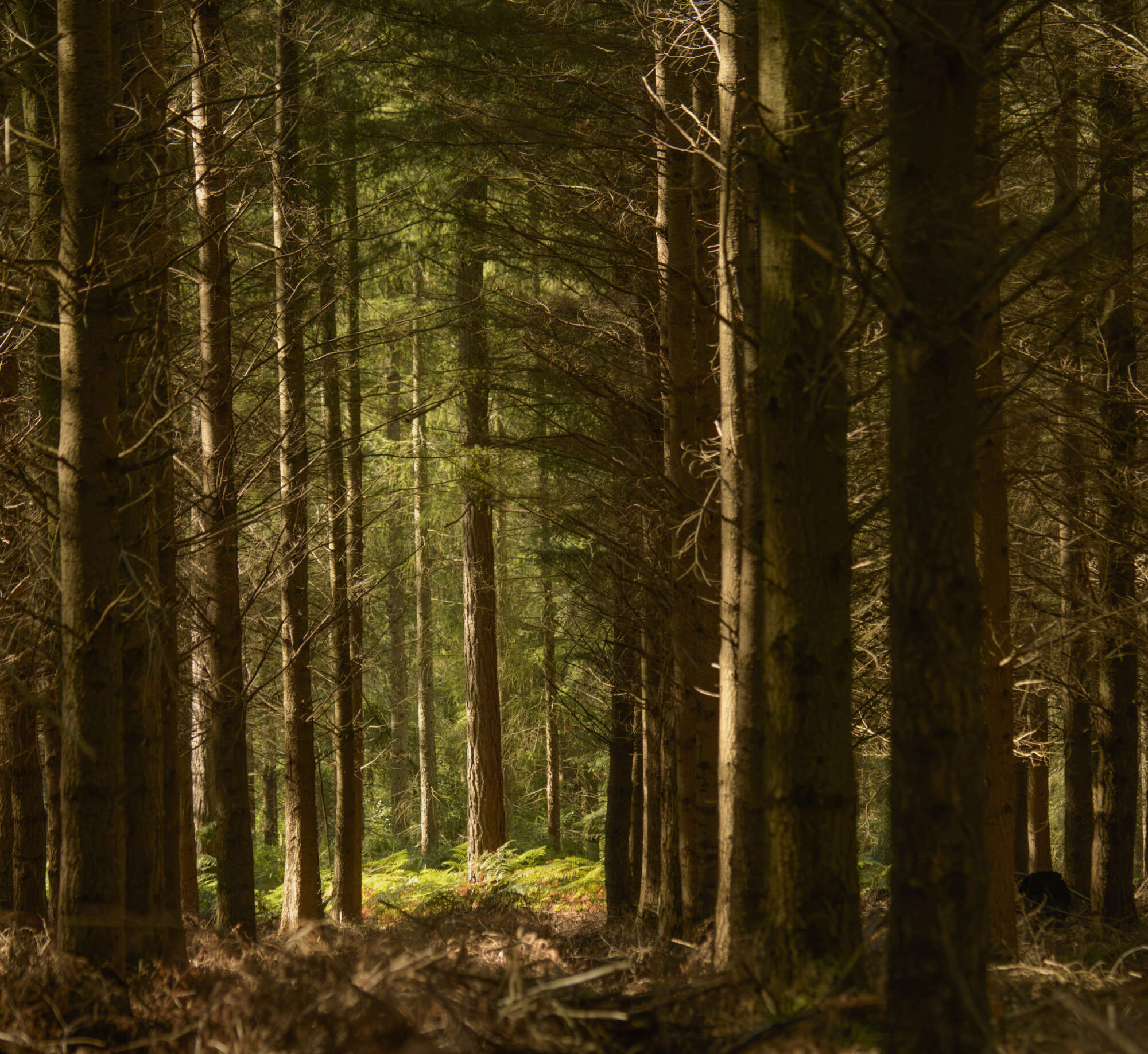
There is still to this day an emotional connection to making a print. If you commit to producing a print and elect to display it on a wall in your home, it becomes part of your everyday life. Seeing a print displayed can transport you back to the landscape in which it was made, or for others around you, they share this experience and its often remembered. We walk past it, are beckoned back to it and see things we missed during previous gazes. A print has an integrity to it that a digital image does not. A print reflects light, in the same way that we use reflected light to make the exposure in the first instance,
Also, committing to making a print makes you a better photographer. If making prints is a part of you being a visual artist then when using the camera, you will be more considered and thorough, as what you are creating is something that may be seen by others in print form. Therefore, you will be far more likely to take your time and make fewer exposures, which in my opinion has never been a bad thing. I spent many years working in large format when every expensive sheet of film counted and if you made a poor composition or miscalculated an exposure, you very quickly learned from it. Taking your time was as important as understanding the equipment you were using whilst you were doing it!
Today, who cares if you make a mistake or the composition may not work, you can simply ‘fire away’ and choose when you get back in the hope that one of the extensive collection will possess the qualities you hoped for. Furthermore, the practice of pre-visualisation has mostly been forgotten in the freedoms we have been afforded. If we can, at no further expense, make as many exposures as we choose, we are not allowing the time to engage with our surroundings and think of prints that will say something ‘about’ the place rather a photograph ‘of’ it.
If making a print is the intention of the photographer, then editing becomes a critical consideration. It is an entirely different proposition to be pleased with the resulting image on a computer screen than it is knowing you are committing it to print where every tone, colour, and element of the composition and even possible distraction will be presented to you as a finished piece of visual art. I have seen it time and again when a photographer presents me with a ‘finished’ file only to be still readjusting and cleaning the image twenty minutes later prior to the ‘print’ button is pressed.
I don’t believe every photograph needs to be printed, nor do I think that printing automatically makes a photograph more valuable. There are plenty of images that work perfectly well as digital files, but I do think we should be asking ourselves why we photograph in the first place. Is it simply to produce an image that somebody might briefly look at on a social media feed or is it to create something that has enough meaning, quality or emotional impact to warrant a more permanent existence? Furthermore, when we have our finished print in hand, we evaluate our work more and move beyond simply admiring what we have created but consider how we could have improved the composition, but more often, the way we have edited the original file.
I may well be old fashioned, but I still believe that the image on the screen makes us image-makers whilst the person holding the photographic print makes them a photographer. We all as photographers should reverse our thinking process and when we are out there with our cameras, imagine what the image we are composing could look like as a finished print adorning a wall. Maybe then the value of our actions will carry more importance and be guided by the wise hand of intention.

