
Photographing with Intent
Article

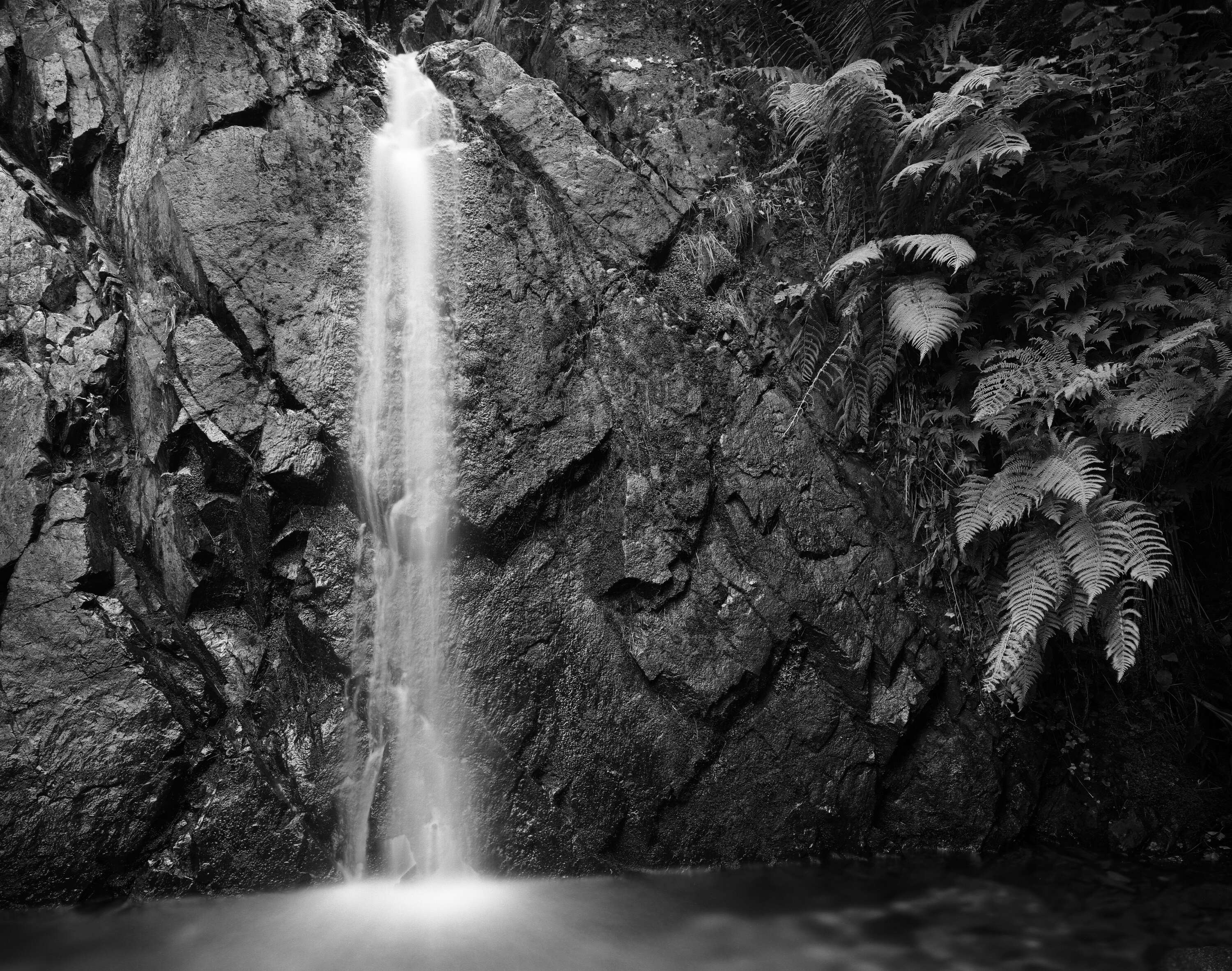
Paul Gallagher
For me, black and white photography has never been an effect or stylistic option. It is a way of understanding light, structure, atmosphere, and interpretation. Over time, I have come to realise that monochrome photography is not about removing colour, but about seeing differently.
I’m probably the wrong candidate to be answering this question. My first response would be a defensive, “Why not?” or, if not that, an affirming, “You should be doing it.” I was never converted to working in black and white; it converted me. Since that day as a college student in Merseyside, I have known little else. I was enrolled as a student of graphic design and was informed that any future role in such an industry would entail using images, so an understanding of the photographic process would be essential and enlightening.
I wasn’t simply given free rein to snap away at anything I chose but was tasked with a project to explore images that conveyed vertical emphasis. Off I went alone with this perceived constraint in mind, and, within a few hours, I was developing my first roll of film and soon after placing the negative in an enlarger. This was long before the notion of digital imaging had been considered, and students were only offered black and white negative film as a raw material. By this time in the early eighties, colour was of course everywhere. For those of us who can remember, Bonus Print rewarded you with a free roll of colour negative film if you chose to use their developing and print service, which was delivered to you along with your prints.
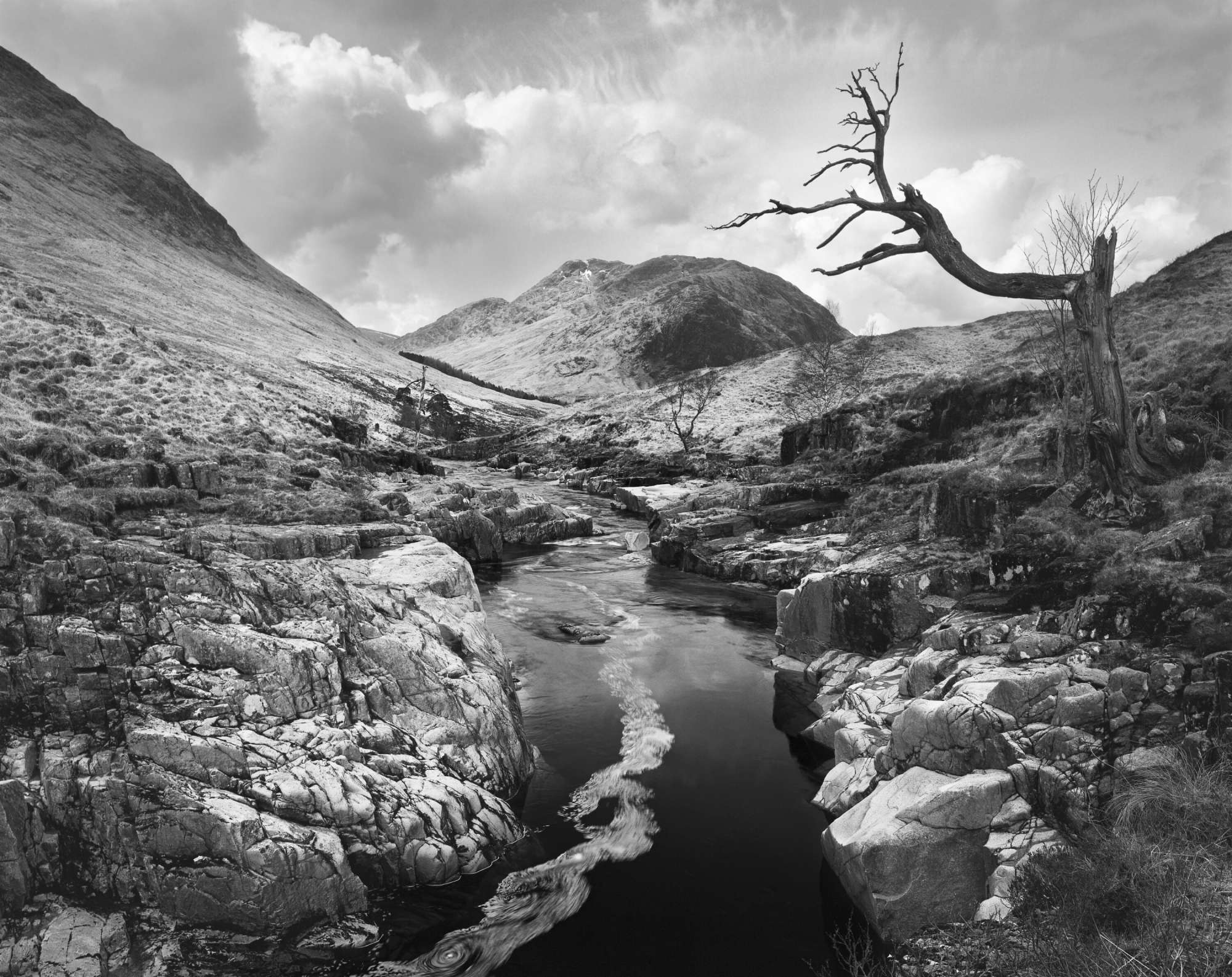
Something changed in me on that day, and it was the juncture in my life when photography became part of me at the tender age of sixteen. Several of my peers soon shunned the ‘old-style’ black and white negative and invested in the full-colour Bonus Print option, but I was taken by it. At the time, as a youngster, I did not really know why. I was fortunate to be a student in a college that boasted a wonderful library, very well stocked in photography books. On one wet winter morning, I was browsing the shelves, and my eyes set upon a deep green book spine displaying the title Examples: The Making of Forty Photographs by Ansel Adams. I slid the book from the shelf and the cover image was “Moonrise, Hernandez.” I stood and stared, then retreated to a chair in a quiet corner. The sky in the photograph was solid black, surrounding the moon, and the small houses in the foreground glinted in the last light of the setting sun. It was this photograph that initiated a lifelong journey of exploring every tone between pure white and pure black.
I was lucky, I suppose. I never made the transition from colour to black and white. My first thirsty explorations in photography were firmly embedded in monochrome, with no sense of loss in the absence of colour. Even at that age, every landscape I set my eyes on was being translated into a rich and diverse variety of sumptuous tones. I am fully aware that I was gifted this passion early on, which enables me to grasp why photographers evolving in the opposite direction — from colour to black and white — can find the evolution more challenging. To ask my younger self what it was about black and white that transfixed me would have possibly been an unanswerable question. But as maturation has taken place, I can now assimilate what I was experiencing — and still do.
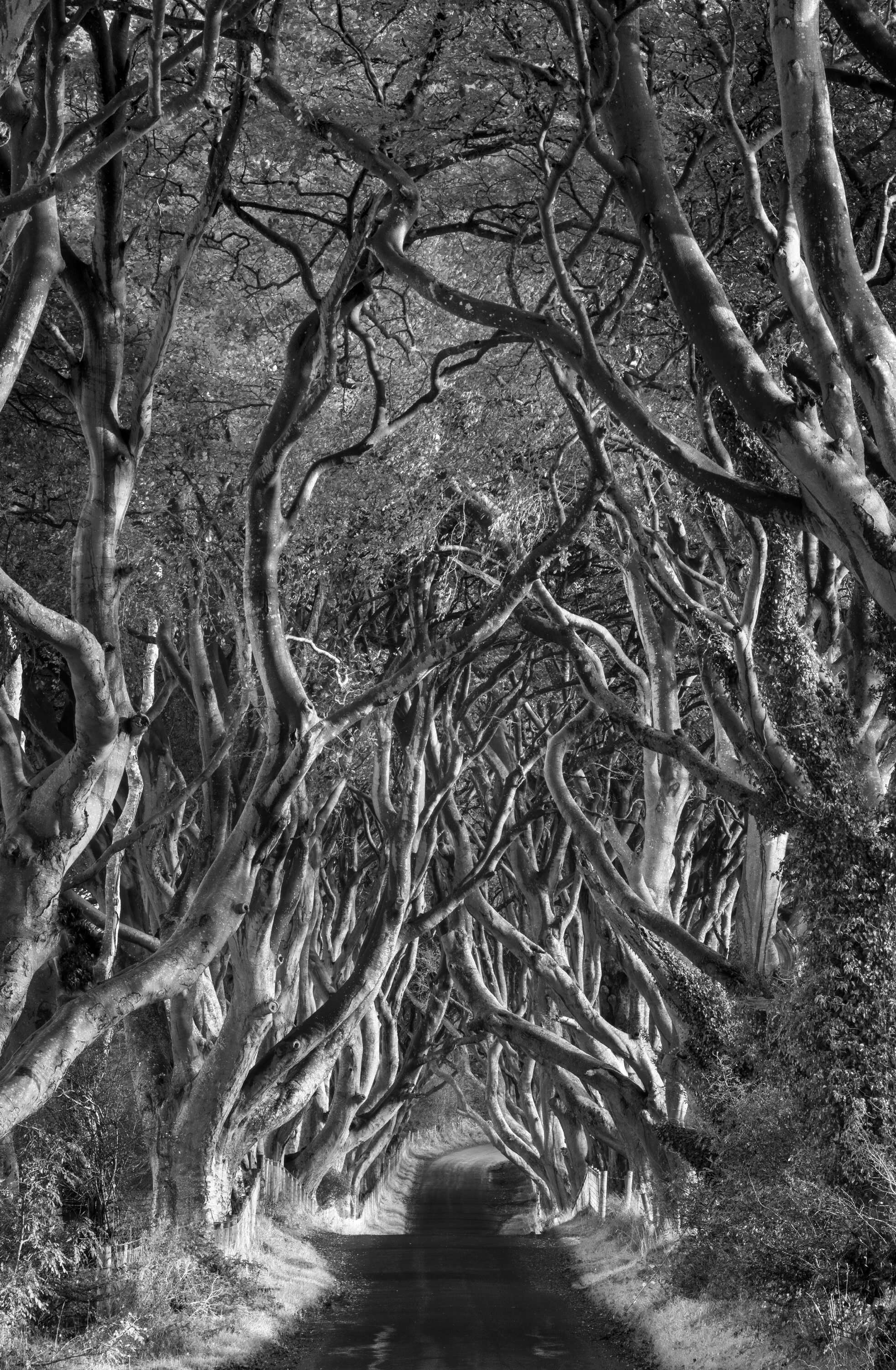
For any of you who know me, I can often be heard simplifying photography as an endeavour where we simply collect reflected light. Black and white photography has nothing else to be concerned with other than the limitless quality and essence of light. When I was poring over the pages of Ansel Adams’s books, what struck me was the way light in the photographs was presented. At no time did any of the photographs feel deficient or bereft of colour. On the contrary, they sparkled with a realism of a world in which colour was not needed. In fact, the presence of colour in any of the images that inspired me would have been detrimental — merely serving as a distraction.
When a photographer elects to delve into black and white, the point at which they first face critical decisions is the moment the image transitions from colour to monochrome. As the vibrancy of colour information is removed, they enter a world where the choices before them are vast, and the familiar colour references no longer exist. It is here where you, as the photographer, can decide the destination and narrative of the image — and most often, where the photographer loses their way. It is for this reason that there have been, and continue to be, many image editing plug-ins providing an array of monochrome ‘looks’ to choose from which, to be frank, I think are largely dreadful. I cannot think of any other art form where the artist gathers the ingredients for their work and then hands it over to someone else to create — worse still, being able to identify the plug-in that was employed!
Therein lies the challenge. It is often assumed that, without the need to concern ourselves with colour, black and white should be a relatively simple pursuit. It is not. Sometimes it is even considered a fallback position if the original colour file is not delivering the goods. Black and white photography is a craft that demands skills which must be honed over time, and not just when we arrive at our computer, but even before we lift the camera out from its bag. We must begin by understanding light and how that alone is being reflected back at us. It is those infinitely varying levels of light that become our infinite blend of tones of grey. Understanding light is the cornerstone and foundation of any photographer, but in particular, the monochrome photographer.
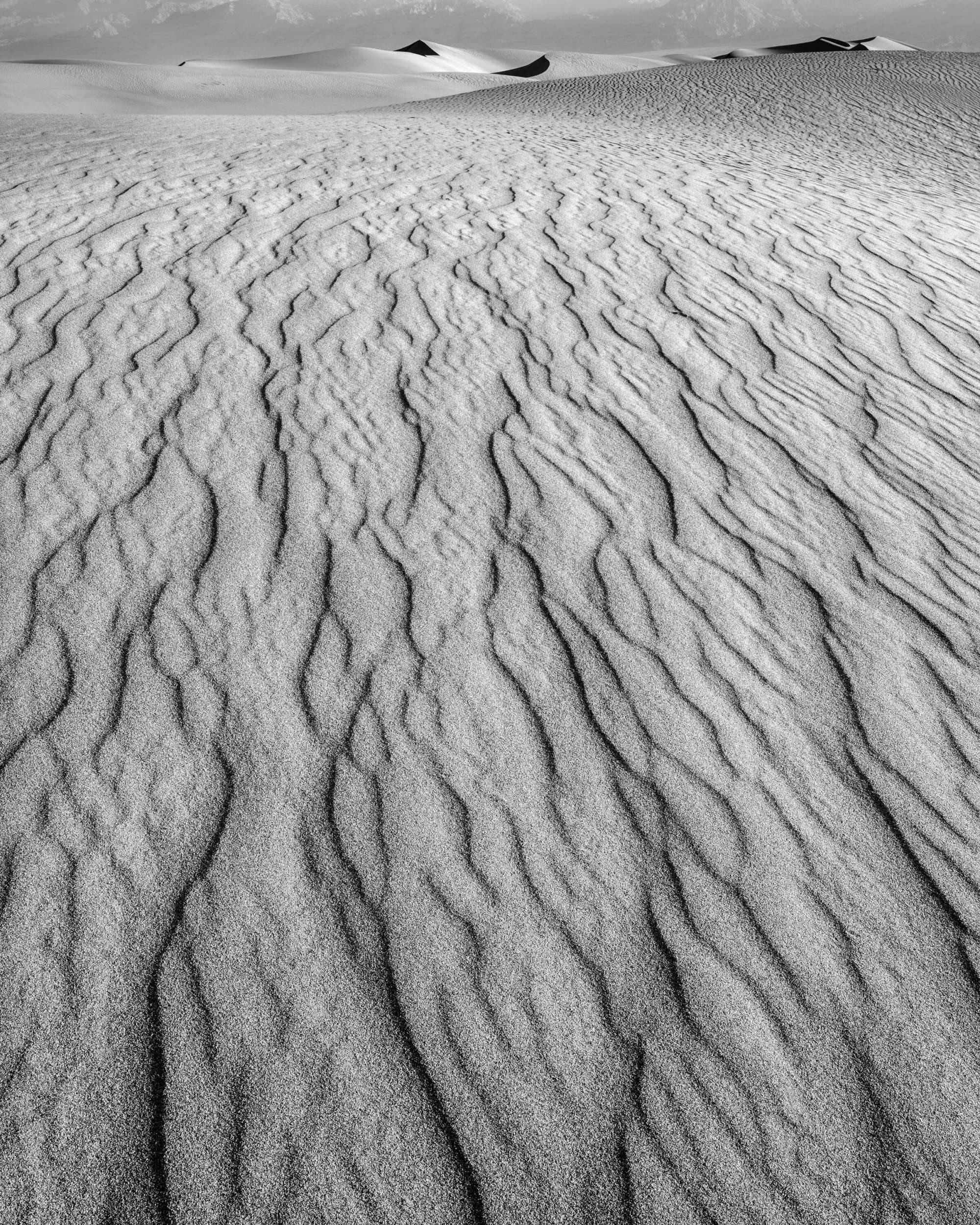
The word previsualisation is often cast around in photographic circles and is a skill that black and white masters have relied upon for decades. If we begin to see our subject as rhythms, forms, textures, shadows, and light, then we begin to discount the colours we are presented with. The very notion of this results in us continuing the practice back at the computer, harnessing everything in our composition where light has been carefully considered. The converse of this is pursuing the act of colour photography in the hope that it may result in a fine black and white photograph. It is a beginning-to-end journey, and nothing is left to chance.
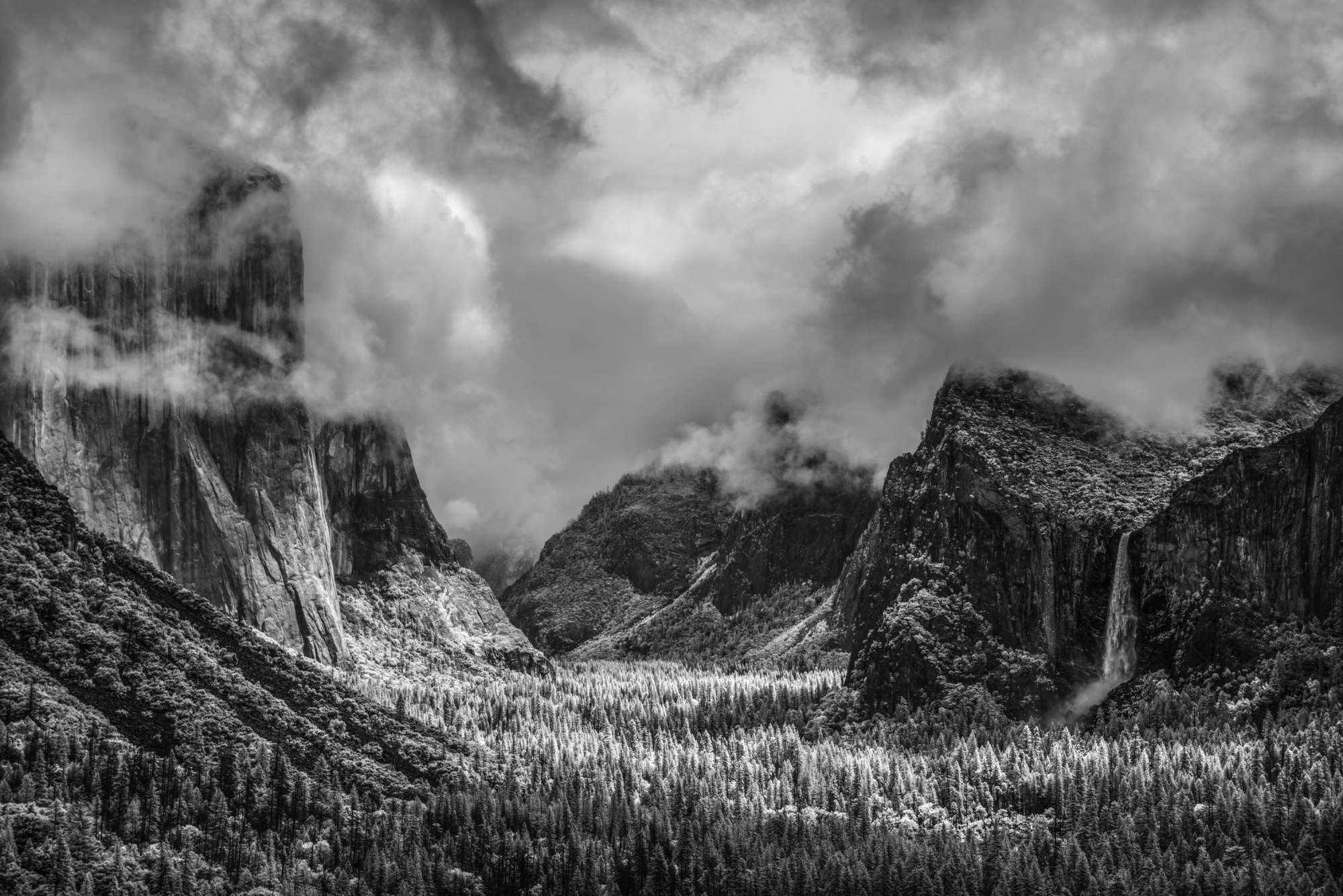
Compared to working in colour, the interpretive power of monochrome photography is unparalleled. Because colour is so very ubiquitous in our world, and we are surrounded by colour images every day, there lies a limitation as to how far you can deviate from that reality. Of course, colours can be intensified or desaturated, but the subject often gives the game away, resulting in an image that may gain a raised eyebrow from the viewer. The same is not the case for black and white images. With the glorious absence of colour, the malleability of tones and expression is almost limitless.
Furthermore, black and white photography emphasizes form, composition, and texture with heightened clarity. In the absence of colour, the viewer’s attention is directed toward the play of light and shadow, the structure of shapes, and the subtle gradations of tone. This approach refines the photographer’s skill in controlling dynamic range and mastering lighting conditions. Artistic control over these elements allows for expressive storytelling, creating mood and atmosphere that can be haunting, joyful, contemplative, or dramatic.
One of the main reasons for the continued high regard of black and white is its historical and artistic significance. For many decades, film-based black and white photography was the primary medium available, and it became associated with the fine arts. The craft of developing film and printing in darkrooms harnessed a deep connection between the artist and the work, highlighting technical prowess and patience. This historical context gives black and white photographs a sense of authenticity and craftsmanship that many appreciate as an essential aspect of artistic expression. Even today, digital tools allow for the conversion of colour images into monochrome, but the traditional processes still appeal to galleries and collectors.

If you have never allowed yourself the opportunity to explore black and white photography, it is not too late and you certainly should. I will not state here that it will be a seamless journey with easily achievable results, but the rewards gained as you move forward will furnish you with a higher degree of proficiency and dexterity that can be drawn upon in any genre of photography. Be prepared to get lost in the avenues of grey and the accompanying frustrations, but always bear in mind that what you are nurturing is the single most important ingredient in photography: light.

