
Discovering Expressive Photography
Retreats


Paul Gallagher
I cannot simply throw myself into my photography; it takes me time to adjust and feel that what I am doing is worthy. This level of self-doubt is good for me. I have consistently been self-critical, which leads to doubt, but when I reach the point in what I am doing and I believe in it, then little will convince me otherwise. I don’t mean this in an arrogant way, but in a way that enables me to cut out what is around me and any association with other opinions.

Much of my work is in places that I am familiar with, and I love to be. Even if I go off into the wilds of another country, which I do often, I usually have some understanding of what I am about to experience, which in a way prepares me for the moment I am there with a camera. I usually spend over 160 days a year travelling, so to be at home is often rewarded by an overwhelming sense of comfort and warmth. This in turn has led to ‘home’ meaning one thing, and my photography becoming something entirely separate.
I live in a very beautiful part of England called Lancashire, which is a large area mostly consisting of open farmland that stretches from the Pennine Moors down to the coast. As you would expect, there are paths aplenty, and you can literally walk for miles far from the roads and truly escape. As I have associated home with a separation from photography, I have hardly ever headed out with my camera in anger, so I have never entered a state of mind that has led me to connect and ‘see’ what is around me. I have simply enjoyed being there.
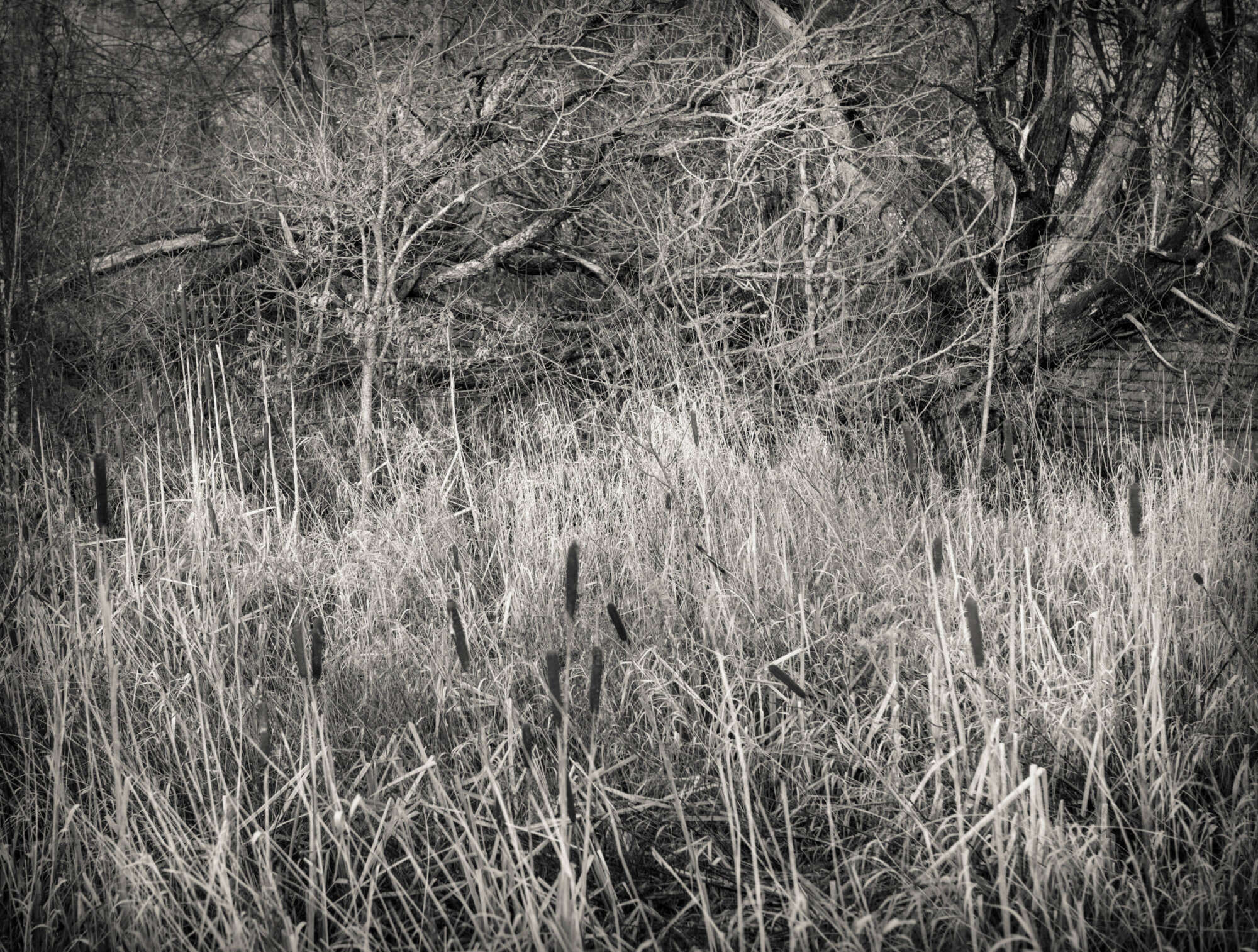
About a year ago I was fortunate to have a good lengthy break at home over the Christmas period, and I did plenty of walking during that time. As ludicrous as it may sound, I had been overloaded with the grandeur of some of the most staggering landscapes I had been fortunate to visit during my year of travel and oddly sought out, and began to relish, in the sparse winter landscape surrounding my house. I live on the edge of a protected valley park which covers an area of 800 acres and is made up of woodlands and meadows, through which the River Lostock runs.
After all the years of living here, I began to look around me and slow the walks down a little. It became therapeutic, and as I had the time to truly relax, I began to see my surroundings differently. I recall walking the little bridges over the river, stopping for a while and noticing how the river flowed and how the grasses bent in the breeze. Even after a lot of walks, it took some time to commit to going out with my camera. In a way, it was two things that I recall troubled me. Firstly, as much as I knew I was so fortunate to live in such beautiful surroundings, it felt in some way slightly insignificant compared to the environments I often travel to. Secondly, this doubt became a challenge as I often questioned how I could make photographs of something that I thought of in such a way. Being this self-critical and harbouring self-doubt was what was stopping me.
This point of realisation meant that only one thing was to be done, and that was to go out with my camera and at least try. The difficulty at first was one of emotion and pressure. This was different to most environments I had worked in because I was so very familiar with this parkland that I was trying to understand how I could transcend this state and become a photographer in it. I came to one conclusion very quickly. In much of my work, I try to make order out of chaos. This is, in most cases, a mechanism of distilling the elements of a composition and simplifying it. For me, here at home, it did not seem essential to do this. A lot of the smaller trees and thickets in the parkland would have made this almost impossible, so I accepted this as an ingredient and the pressure began to wane a little. A little chaos felt right! I also allowed myself to see the parkland in sections. I began to compartmentalise the individual elements that started to fascinate me.
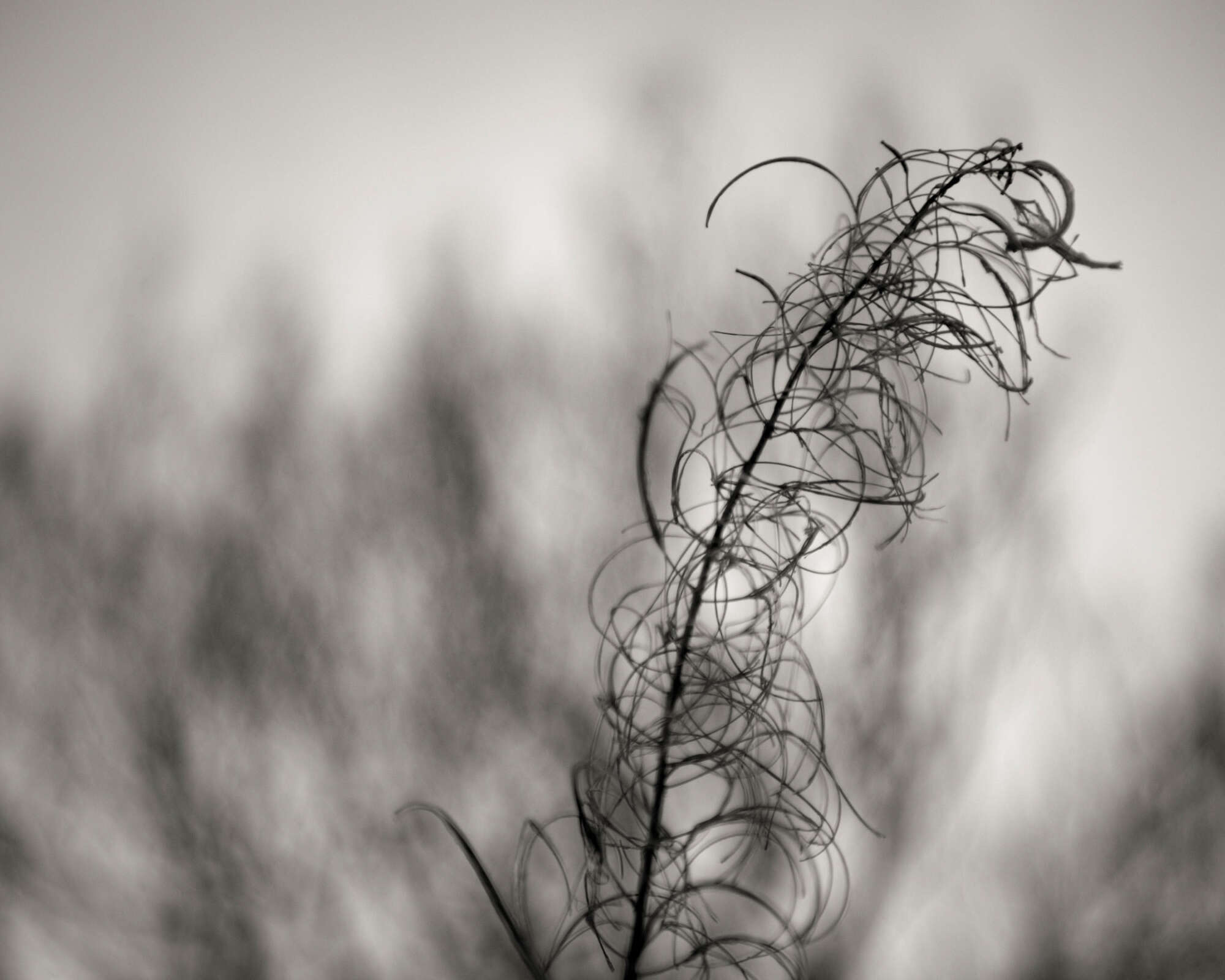
Because of the winter conditions, there were very few leaves left on the trees, but the ones that shimmered and looked fragile. The bare trees against the dark winter storm skies took on a new meaning to me, and the larger beech trees became muscular arms reaching far above. Another feature of the parkland is the ponds that appear regularly. Although I was familiar with them, having walked past them hundreds of times, I had not allowed myself the time to see their reflections of the surrounding trees or how the reed-beds changed over the seasons.
After these first outings in December, I decided the safest way for me to nurture this new relationship with the parkland was to make some prints. This, for me, is the completion of the journey and a way I can relate to my photography rather than just viewing images on a screen. For me, the finished print is the final expression. Still to this day, I feel at ease with black and white photographs, so I decided to dedicate the initial parkland study to monochrome. Having printed out some samples, I realised that I had made a distinct connection whilst out there. The photographs revealed the very essence of the place, and more importantly, what I felt and how I interacted whilst making photographs. This led me to explore further, and as a result I began seeing the seasons changing and actually sought out the opportunities as often as time would allow when I returned home.

Returning to a place again and again harnesses a relationship, and if you do this in a photographic capacity, it creates a greater understanding and emotional bond. After only a short time, I have now become familiar with many of the places I have photographed at different times of the year and how transformations during the seasons offer a plethora of opportunities for making photographs. A vital lesson learned is that you certainly do not have to be in exotic or dramatic places around the world to get excited about making landscape photographs. Now I see the parkland as a place where I am very much at ease, and I feel no pressure at all to ‘do it justice’. This phrase has often baffled me as I have never fathomed what ‘justice’ should be. I suspect it is a photograph that will attain a certain reaction from the viewer that should align with what you felt when you were stood there. In the parkland, I just make photographs of things that I deem beautiful, photographs of subjects that moved me at the time, and I really don’t care what others may think. This has been wonderful!
I now have a place to go from my front door that is not only close in distance, but close in a personal connection. It is not a place of icebergs and glaciers, dense forest or glen. Neither is it a place to hear crashing waves or see towering mountains, but a place of ponds, trees and paths that I once paced along, but now I wander slowly with an eye that sees so much more.

