
Are you collecting or creating?
Article


Michael Pilkington
We often speak about taking photographs. Less often do we pause to ask when they are finished. Is it at the moment the shutter closes? When the RAW file is processed and shared on a screen? When it gather approval online? Or is something still unresolved until the image becomes physical, tangible, real?
For me, a photograph is not complete at capture. Nor is it complete when it first appears on a screen. The life of an image extends beyond those stages. It begins in the field with intention, moves through careful refinement in post-processing, and finds its fullest expression when it is realised as a print.

I have the good fortune to travel to many places around the world. I also spend time near home exploring the local landscape, mainly trees and woodlands, which is a genre I love, especially in infrared.
When I return home, I may have a few images or many if I have been away for an extended period. I don’t make that many exposure. I like to visualise the landscape in front of me and imagine the finished photograph in a print, mounted and framed and hanging on a wall. If I can’t imagine that outcome or I don’t think it will work, then I won’t make the exposure. Already, in the field, I am thinking about completion.
I am demanding and critical of my own work, and experience has taught me what is likely to endure and what will feel merely competent.
In general, though, I am excited about the anticipation of seeing the RAW file on the ‘big screen’. It is then that you can truly evaluate what you have captured. If you are fortunate, you will immediately be excited by what you see. Often, you have to work your way through the image to reveal the somewhat hidden treasure within. You have to nurture the file, recovering the light, restoring balance between shadows and highlights, clarifying what you saw. Sometimes, though, this can result in arriving at a dead end. The potential that you anticipated in the field is not to be, and your mind’s eye has outwitted you with reality versus expectation. However, being selective in the field, previsualizing what can be, carefully managing the exposure and allowing yourself to connect emotionally with the environment you are in often reaps rewards.

It is this process, back at your computer, using your image editing software of choice, that is just as important as being in the field. It is the continuation of the photograph’s journey.
It is something that many photographers do not enjoy as much as being out there with their cameras capturing the image. Having worked with many photographers in my career, image editing is often described in negative terms as a necessary evil to be over and done with and certainly one laced with complexity and frustration. It is clear from conversations with photographers that confidence in what and how to use programmes like Lightroom and Photoshop is the main rationale behind this opinion and the failings that ultimately result from using them.
Equally, they may not have been so discerning in the field so that they cannot completely recall why they took the image in the first place, the light, the atmosphere, the non-visual aspects such as the wind, scent, ambience. This disconnection from these critical aspects may result in the reliance on third-party plug-ins that can offer a pre-packaged, ‘processed’ look and feel.
Knowing the tools that we have at our disposal and their capabilities to such a degree that you are fluent in their use means that they do not require conscious thought. You can give your full attention to the creative aspects of creating your finished photograph.
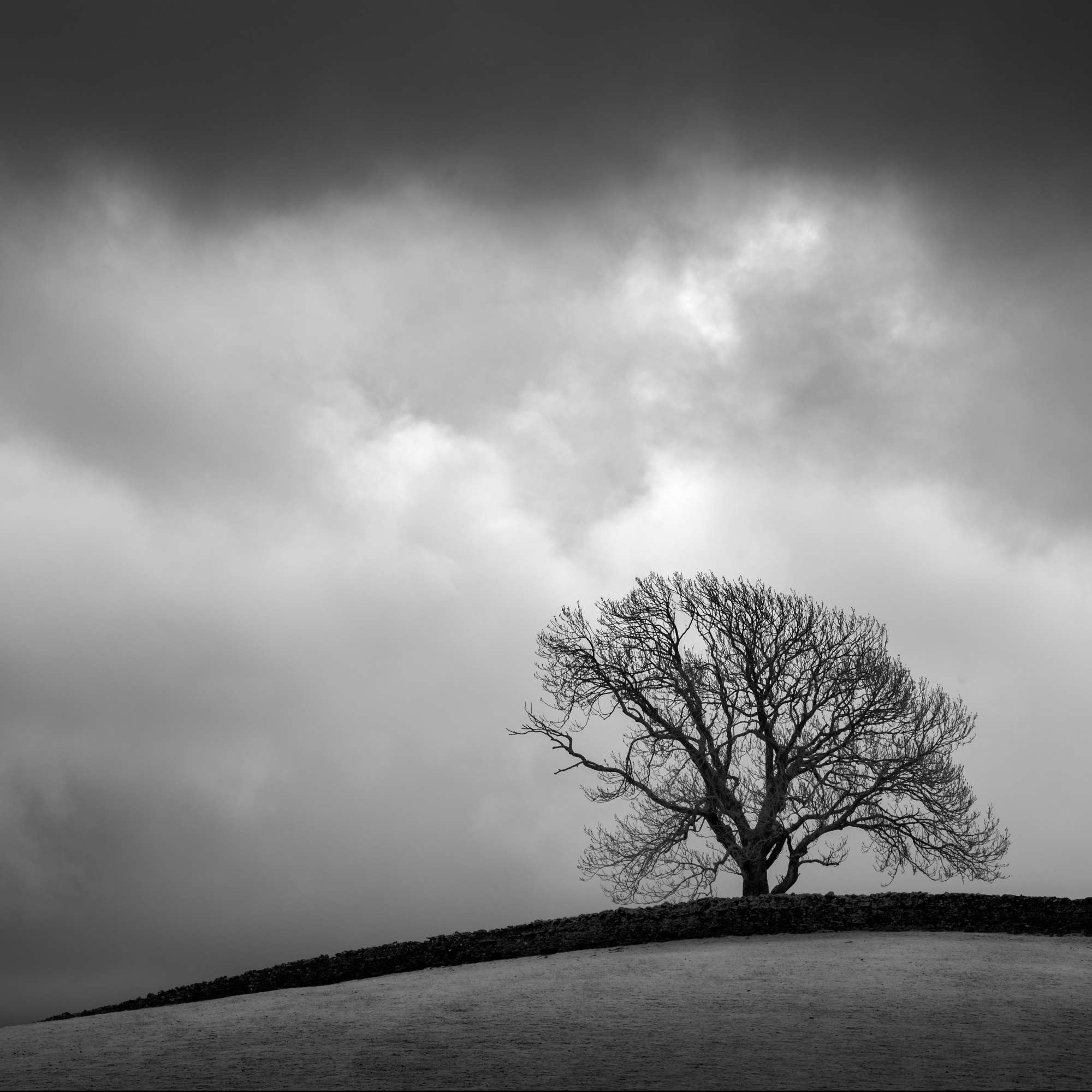
Image editing is not quite the end of the story. A photograph may look convincing on a screen, luminous and vibrant, aided by a backlit display and generous contrast. But something is still provisional. It remains light without substance.
Printing changes that. When an image is committed to paper, there is nowhere left to hide. The surface is fixed. The tonal decisions are exposed. Weakness in shadow detail, imbalance in contrast, uncertainty in colour, all become visible. A print is less forgiving than a screen. It does not glow. It reflects. It asks more of the image.
This is why printing is demanding. Not because of technical complexity alone, but because it requires commitment. Once printed, the photograph becomes an object. It occupies space. It can be held, examined, and lived with. It must stand on its own.
Many photographers stop before this point. A finished digital file feels complete enough. But for me, it remains unresolved until it has passed through this final stage. Only then does it feel resolved.

In summary, printing is not an optional extra in my process. It is the moment when the photograph fully reveals itself. As the print emerges from the printer, millimetre by millimetre, there is anticipation. Have I honoured the light? Have I balanced the shadows? Have I prepared the file well enough for this paper?
When the sheet finally rests in my hands, the image is no longer just light on a screen. It has weight. Surface. Presence. It can be lived with. It can be judged honestly.
The journey of that photograph began long before, in the cold before sunrise, in the quiet of a woodland, in the act of seeing and deciding. It moved through refinement and clarification at the computer. But it is here, in its printed form, that it becomes complete.
For me, a photograph is finished when it exists as a print.
