
Remnants On The High Plains
Article

Mark Lawrence
Life is full of twists and turns and, I guess that’s one of the things that generally makes it fun and interesting. Of course, not all of life’s events are happy ones, and sometimes they change us in a way that we hadn’t expected. Last year I was in Scotland and had spent time photographing my favourite landscapes, lochs, mountains, seascapes – the weather had been kind to me, and as I headed away from Ullapool towards Inverness, I was looking forward to a few days in the Yorkshire Dales with my wife, who was heading up from London. Then, from nowhere, two deer leapt out of the darkness and, despite braking hard, I knew I couldn’t avoid hitting at least one of them. The result was that my car was a write off, the deer escaped, hopefully, no worse than bruised.
As photographers, we rely on transport of one sort or another to explore and visit locations that capture our imagination, and the car is perhaps the most used mode, as many of the locations we love have limited or no public transport. Of course, I needed to get another car……..or did I? My wife had a car, so I started to wonder if another car was essential – aside from the environmental impact, I reckoned that I could afford to hire a car for 7 weeks of the year and be a little better off than if I bought a car. So here we are 15 months later, and I no longer own a car, for the first time in nearly 40 years.
Since the write off, I have been to Scotland a couple of times, a mix of public transport and a hired vehicle worked fine, but more significantly, I have been exploring places closer to home using public transport. Looking back, I wonder if I was ready for this change. We visit places like Scotland because they offer us beautiful landscapes in which we can explore nature and make wonderful images that take us away from the day-to-day routine, which, for most of us, is in an urban area. In my free time, I decided to explore some landscapes that are urban and industrial, walking the banks of the Thames, not by London’s bridges and architecture, not through Oxfordshire’s meandering meadows, but towards the estuary, starting at the Thames Barrier.
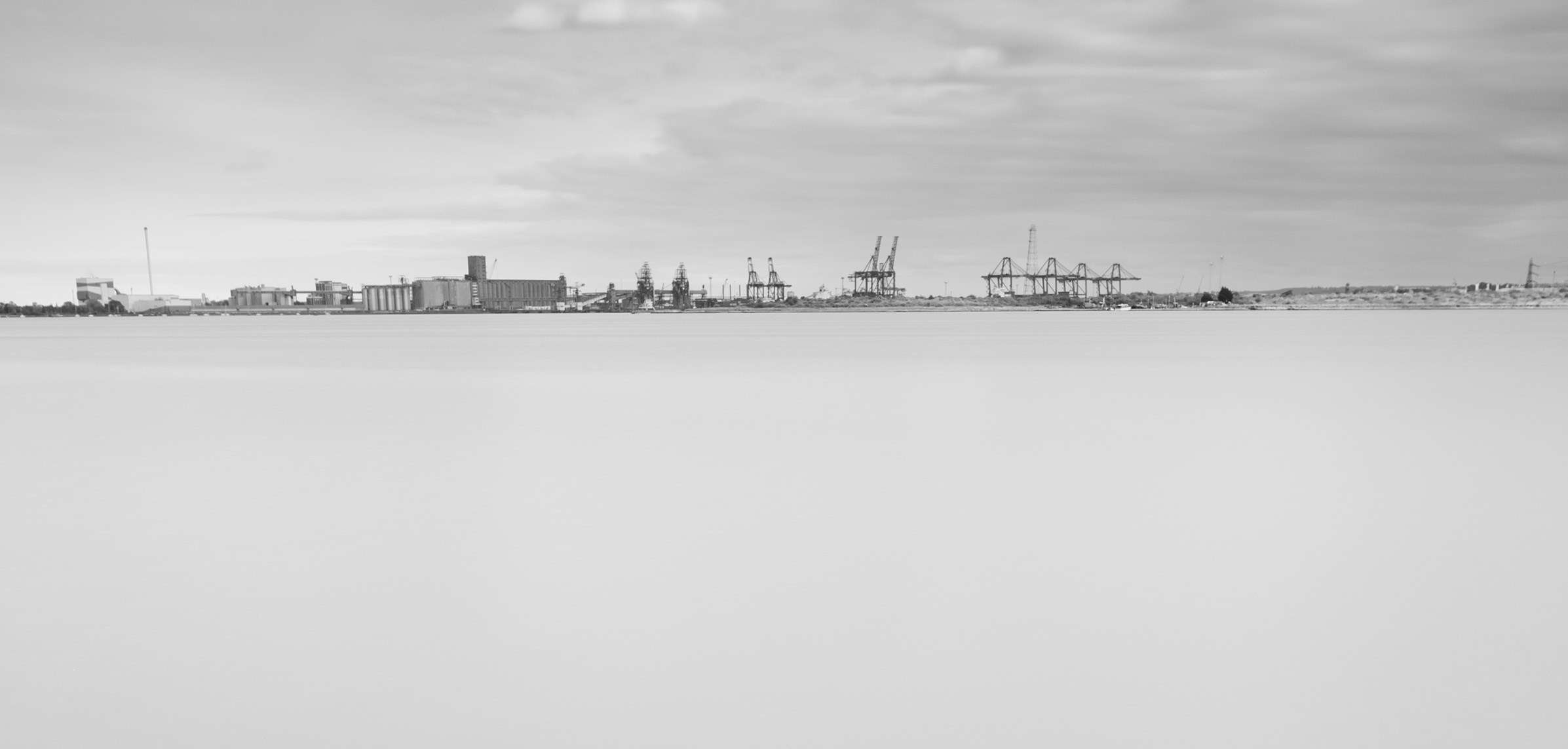
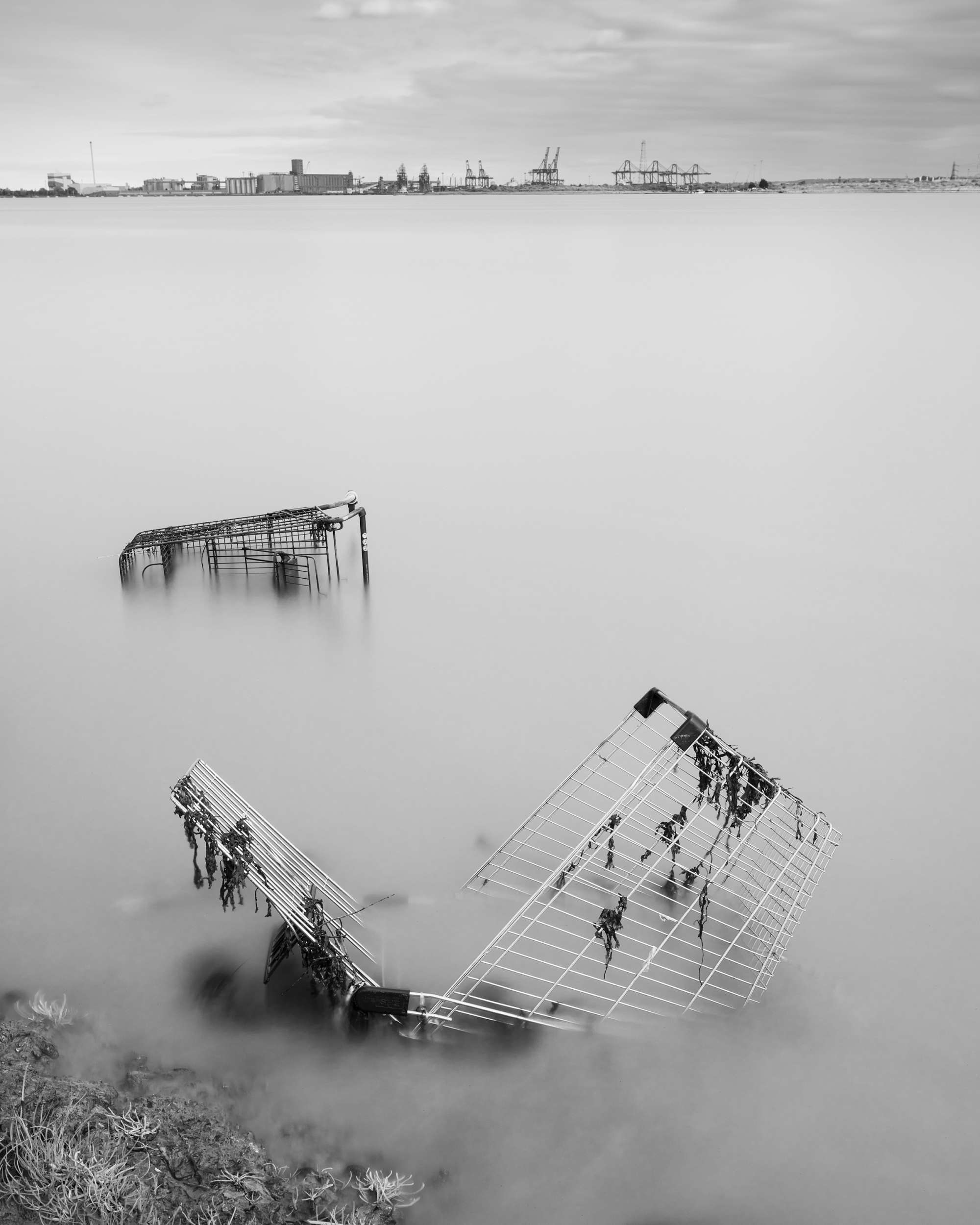
On one of my first walks at low tide, I was struck by the rubbish that had been thrown by local residents into this great river, and as I explored further, I discovered how much industry is still using the river as a vital transport link, in some cases, only a few miles from Tower Bridge. I found it a rather depressing but nonetheless fascinating landscape with a mixture of new industrial development alongside relics of the past, all mixed amongst marshland that is home to a multitude of wildlife. Then there are the residential developments, old and new, rubbing shoulders with industry. It is mostly a harsh, gritty environment with graffiti, rubbish, high concrete flood walls, razor wire fences, tank farms and factories. It is a challenging environment in which natural beauty is hard to find; it is an environment that shows clearly the impact we have on the planet we live on. As I walk the paths alongside the river, I wonder if the industry that is seemingly always within my line of sight, with its blatant disregard for the natural environment in pursuit of giving me, the consumer, what I want, makes some feel that throwing rubbish into the river is OK. I come across three metal benches positioned below the towering chimneys of a soap factory – I wonder who comes and sits here, perhaps their only place of escape from the four walls of home.
